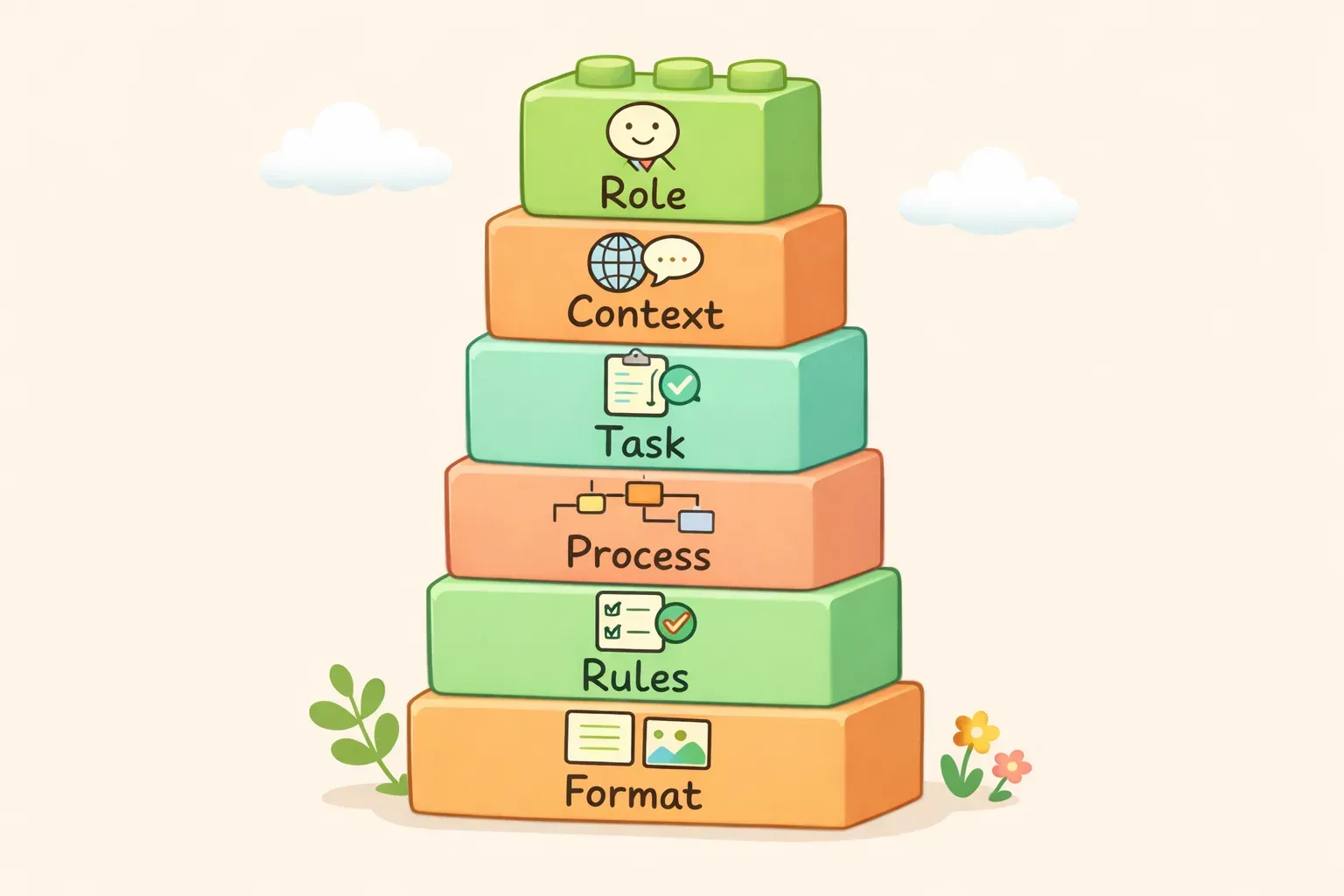
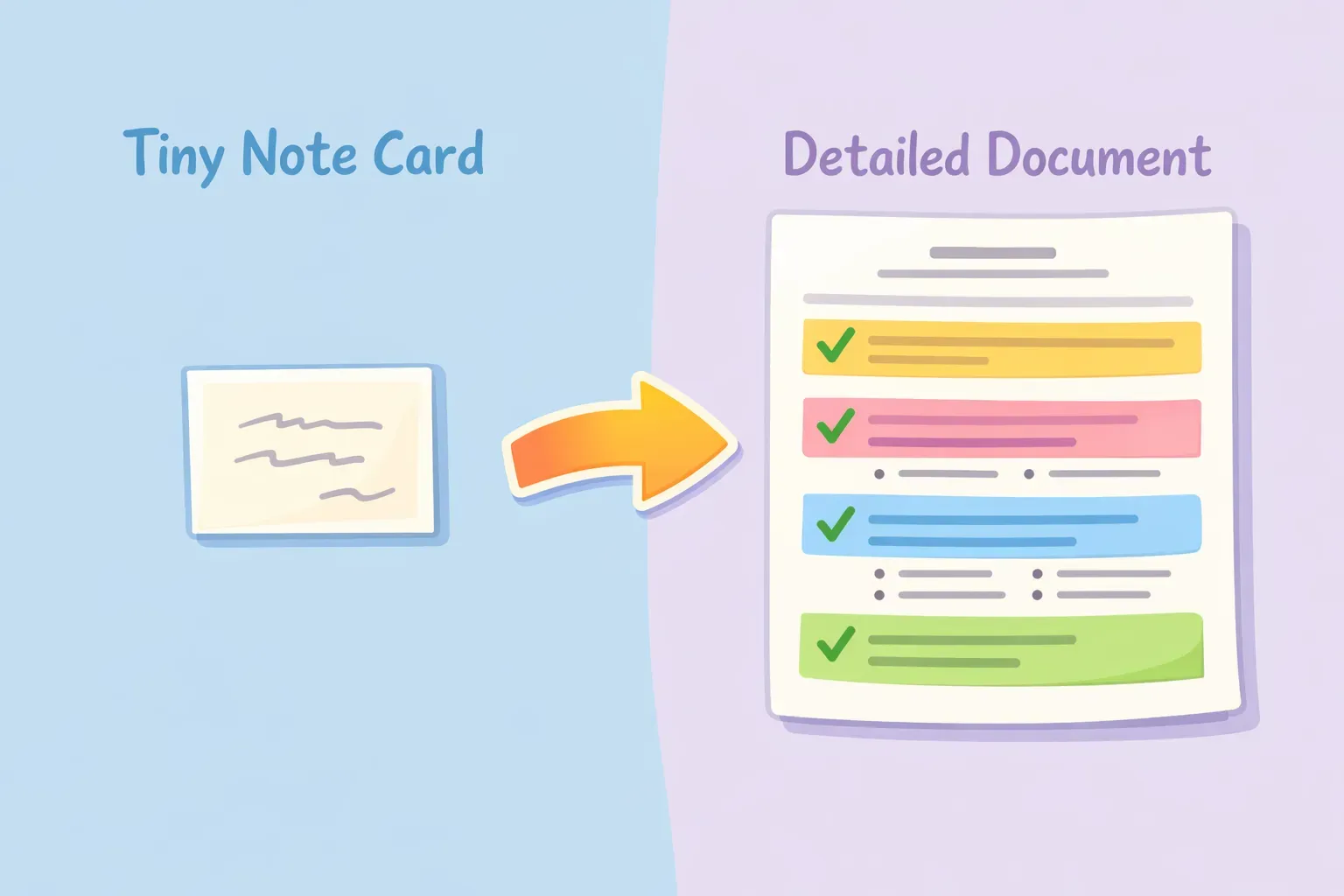
ในขณะที่พรอมต์ธรรมดาอาจเขียนแค่ "เขียนอีเมลการตลาด" mega-prompt จะระบุบทบาทที่อยากให้ AI สวม บริบทที่ต้องรู้ งานที่ต้องทำ ขั้นตอนที่ต้องเดินตาม กฎที่ต้องเคารพ และรูปแบบผลลัพธ์ที่ต้องการ — บอกข้อมูลทุกอย่างที่ AI ต้องใช้ตั้งแต่แรก แทนที่จะต้องถามตอบกันไปมาหลายรอบ
ดูตัวอย่างเทียบกันครับ:
พรอมต์แบบธรรมดา:
Write a product description for my new fitness app.
Mega-prompt:
You are a conversion-focused copywriter who specializes in health and fitness apps.

Task: Write a product description for a fitness app called FitTrack.

Context:
- Target audience: Busy professionals aged 30-45 who want to exercise but struggle with consistency
- Key features: 15-minute workouts, no equipment needed, progress tracking, reminder system
- Tone: Motivating but not preachy, acknowledges real-life constraints
- Competitors emphasize intensity; we emphasize sustainability

Requirements:
- Open with the reader's pain point, not the product name
- Include 3 bullet points highlighting key benefits (not features)
- End with a low-pressure call to action
- Keep it under 150 words
- Avoid fitness clichés like "transform your body" or "unleash your potential"
พรอมต์ธรรมดาปล่อยให้ AI เดาเองเรื่องกลุ่มเป้าหมาย โทน ความยาว และจุดโฟกัส ส่วน mega-prompt ขจัดการเดาออกไปทั้งหมด จากงานวิจัยเกี่ยวกับความยาวพรอมต์และคุณภาพผลลัพธ์ของ AI ช่วงที่เหมาะที่สุดสำหรับงานซับซ้อนมักอยู่ระหว่าง 150 ถึง 300 คำ — แม้บางงานจะได้ประโยชน์จากคำสั่งที่ยาวกว่านั้นก็ตาม
บอก AI ว่าให้สวมบทบาทเป็นใคร สิ่งนี้จะกำหนดระดับความเชี่ยวชาญ คำศัพท์ และมุมมองของคำตอบ
"You are a senior financial analyst..."
"Act as an experienced UX researcher..."
"You are a patient teacher explaining this to a complete beginner..."
2. บริบทหรือข้อมูลพื้นหลัง
ให้ข้อมูลที่ AI ไม่มีทางรู้เอง — สถานการณ์เฉพาะ กลุ่มเป้าหมาย ข้อจำกัด หรือเป้าหมายของคุณ ยิ่งใส่บริบทที่เกี่ยวข้องมากเท่าไหร่ ผลลัพธ์ก็จะยิ่งเข้ากับงานของคุณมากเท่านั้น
งานนี้ทำเพื่อใคร?
สถานการณ์หรือเรื่องราวเบื้องหลังเป็นอย่างไร?
ลองอะไรไปแล้วบ้าง?
มีข้อจำกัดอะไรบ้าง (งบประมาณ กรอบเวลา โทน)?
3. งานหรือเป้าหมาย
บอกให้ชัดว่าอยากได้อะไรจาก AI ระบุสิ่งที่ต้องการแบบเจาะจง
"Create a 4-week content calendar..."
"Write 5 email subject line options..."
"Analyze these three options and recommend one..."
4. กระบวนการหรือขั้นตอน
สำหรับงานซับซ้อน ให้ระบุกระบวนการคิดหรือลำดับขั้นที่อยากให้ AI เดินตาม วิธีนี้มีประโยชน์มากเมื่อต้องการให้ AI ค่อย ๆ คิดอย่างเป็นระบบ แทนที่จะกระโดดไปสรุปเลย
"First, identify the key factors. Then evaluate each option against those factors. Finally, recommend..."
"Work through this step by step..."
5. ข้อจำกัดหรือกฎ
กำหนดขอบเขตว่า AI ควรทำหรือไม่ควรทำอะไร ช่วยป้องกันข้อผิดพลาดที่พบบ่อย และทำให้ผลลัพธ์ไม่หลุดประเด็น
"Do not use jargon or technical terms"
"Avoid clichés like 'innovative' or 'cutting-edge'"
"Do not make assumptions about data I haven't provided"
"If you're uncertain, say so rather than guessing"
Create a content brief for a blog post about {{topic}}.
ขั้นที่ 2: ใส่บทบาท
AI ควรสวมบทบาทเป็นใครเพื่อทำงานนี้ได้ดี?
You are a content strategist who specializes in SEO-driven blog content for B2B SaaS companies.
ขั้นที่ 3: เพิ่มบริบท
AI ต้องรู้อะไรเกี่ยวกับสถานการณ์ของคุณบ้าง?
Context:
- Our blog targets marketing managers at mid-sized companies
- We prioritize actionable advice over thought leadership
- Posts typically rank for long-tail keywords with 500-2000 monthly searches
- Our brand voice is conversational and practical, never salesy
ขั้นที่ 4: ระบุกระบวนการ
ถ้าลำดับสำคัญ เขียนขั้นตอนให้ชัด:
Process:
1. Identify the primary keyword and 3-5 secondary keywords
2. Analyze what the top-ranking articles cover
3. Find the content gap — what's missing or outdated
4. Outline 6-8 H2 sections that address the gap
5. Suggest a hook angle for the introduction
ขั้นที่ 5: ตั้งข้อจำกัด
เพิ่มกฎเพื่อกันปัญหาที่มักพบ:
Rules:
- Do not suggest generic sections like "What is X" unless truly necessary
- Avoid recommending topics we can't credibly write about (e.g., technical implementation)
- If you're unsure about search volume estimates, say so
ขั้นที่ 6: กำหนดรูปแบบผลลัพธ์
ระบุให้ชัดว่าอยากให้ผลลัพธ์มีโครงสร้างยังไง:
Format your response as:
- Working title (under 60 characters, includes primary keyword)
- Primary keyword + search intent
- Secondary keywords (3-5)
- Target word count
- Outline with H2 sections and 1-sentence description of each
- Hook angle for the intro (1-2 sentences)
- Key differentiator vs. competing articles
Mega-Prompt ฉบับสมบูรณ์
เมื่อประกอบทุกอย่างเข้าด้วยกันจะออกมาแบบนี้:
You are a content strategist who specializes in SEO-driven blog content for B2B SaaS companies.

Task: Create a content brief for a blog post about {{topic}}.

Context:
- Our blog targets marketing managers at mid-sized companies
- We prioritize actionable advice over thought leadership
- Posts typically rank for long-tail keywords with 500-2000 monthly searches
- Our brand voice is conversational and practical, never salesy

Process:
1. Identify the primary keyword and 3-5 secondary keywords
2. Analyze what the top-ranking articles cover
3. Find the content gap — what's missing or outdated
4. Outline 6-8 H2 sections that address the gap
5. Suggest a hook angle for the introduction

Rules:
- Do not suggest generic sections like "What is X" unless truly necessary
- Avoid recommending topics we can't credibly write about
- If you're unsure about search volume estimates, say so

Format:
- Working title (under 60 characters, includes primary keyword)
- Primary keyword + search intent
- Secondary keywords (3-5)
- Target word count
- Outline with H2 sections and 1-sentence description of each
- Hook angle for the intro (1-2 sentences)
- Key differentiator vs. competing articles
You are a business strategist helping a founder think through an important decision.

Decision: {{decision_description}}

Context:
{{relevant_background}}

Analyze this decision by:
1. Identifying the 4-5 most important factors to consider
2. Evaluating how each option performs on these factors
3. Noting the key risks and tradeoffs for each path
4. Considering what would need to be true for each option to be the right choice
5. Making a recommendation with clear reasoning

Rules:
- Be direct about tradeoffs — don't hedge everything
- If I haven't provided enough information for a confident recommendation, tell me what's missing
- Avoid generic business advice — be specific to my situation

Format:
- Key factors (bulleted list with 1-sentence explanation of why each matters)
- Option analysis (evaluate each option against the factors)
- Recommendation (1 paragraph with clear reasoning)
- What to watch for (2-3 signals that would change the recommendation)
2. แปลงบันทึกการประชุมเป็นรายการสิ่งที่ต้องทำ
You are an executive assistant who excels at extracting clear action items from messy meeting notes.

Meeting notes:
{{meeting_notes}}

Task: Transform these notes into a structured summary with clear next steps.

Process:
1. Identify the main topics discussed
2. Extract every decision that was made
3. Pull out all action items, assigning owners where mentioned
4. Note any open questions that weren't resolved
5. Flag any deadlines or time-sensitive items

Rules:
- If an owner isn't clear from context, mark it as "Owner: TBD"
- Don't add action items that weren't actually discussed
- Keep each item to one sentence
- Use the exact names/terms from the notes

Format:
## Summary
(2-3 sentences on what the meeting was about)

## Decisions Made
(bulleted list)

## Action Items
(bulleted list with owner and deadline if mentioned)

## Open Questions
(bulleted list)

## Next Meeting
(if mentioned)
3. Brief วิเคราะห์คู่แข่ง
You are a competitive intelligence analyst.

Task: Create a competitive analysis comparing {{my_product}} to {{competitor_products}}.

Context:
- My product: {{my_product_description}}
- Target customer: {{target_customer}}
- Key differentiator we want to emphasize: {{differentiator}}

Analysis process:
1. Identify 5-7 factors customers care about when choosing between these options
2. Rate each product on each factor (Strong / Adequate / Weak)
3. Identify where we win, where we lose, and where it's a tie
4. Note any gaps in my knowledge that would require further research

Rules:
- Be honest about where competitors are stronger — I need accurate intel, not cheerleading
- Base assessments on publicly available information only
- If you don't have reliable information about a competitor's capability, say so

Format:
- Comparison table (factors as rows, products as columns)
- Where we win (2-3 bullets with specific reasons)
- Where we need to improve (2-3 bullets)
- Messaging recommendations (how to position against each competitor)
- Research gaps (what I should verify before using this analysis)